
By Marlene Merritt, DOM, LAc, ACN
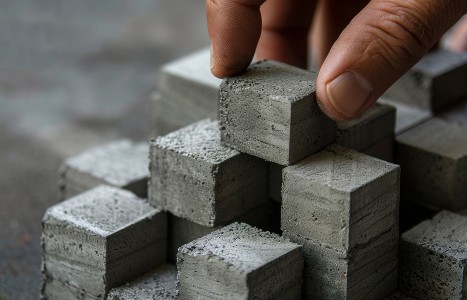
The Snackwell Effect, Part 1 talked about how we lost our ability to regulate blood sugar by overwhelming our bodies with cereal, bread and Ho-Ho's. I finished the article by recommending that you (or your patients) measure a few days of carbohydrate intake (not calories or fat, just grams of carbs) and see how far away from the number 72 you were. This article is going to be about how to reverse this whole process.
Read More
By Laura Christensen, MA, LAc, MAc
Recently, a colleague in another city called to inform me that a patient
had been vandalizing acupuncturists' offices around town and, they
believed, slashing tires of acupuncturists' cars. He wanted to know if I
knew anything about this person, and to warn me. The police had been
called, and the victims were trying to put together a case against the
person. I will call this person Sally.
Read More
By William Morris, DAOM, PhD, LAc
East Asian medical research focuses on quantitative means of proof. This
affects the information obtained, thus what become considered best
practices. I maintain that the world of East Asian medicine might also
be understood through qualitative means. In this article, I address the
thinking behind these forms of research and to provide some examples of,
and resources for, qualitative methods.
Read More
By Darren Starwynn, OMD, LAc
You will frequently have good success in relieving localized bodily pain
with microcurrents by simply "circling the dragon"; that is,
stimulating where it hurts. This is usually not the case, however, in
the treatment of headaches. According to the principles of Chinese
medicine, headaches are often the result of imbalanced or weakened
meridian energies in the body "flushing up" to the head, and so are
really referred pain. Applying stimulation to the head only will not
dependably relieve a headache and can often aggravate it.
Read More