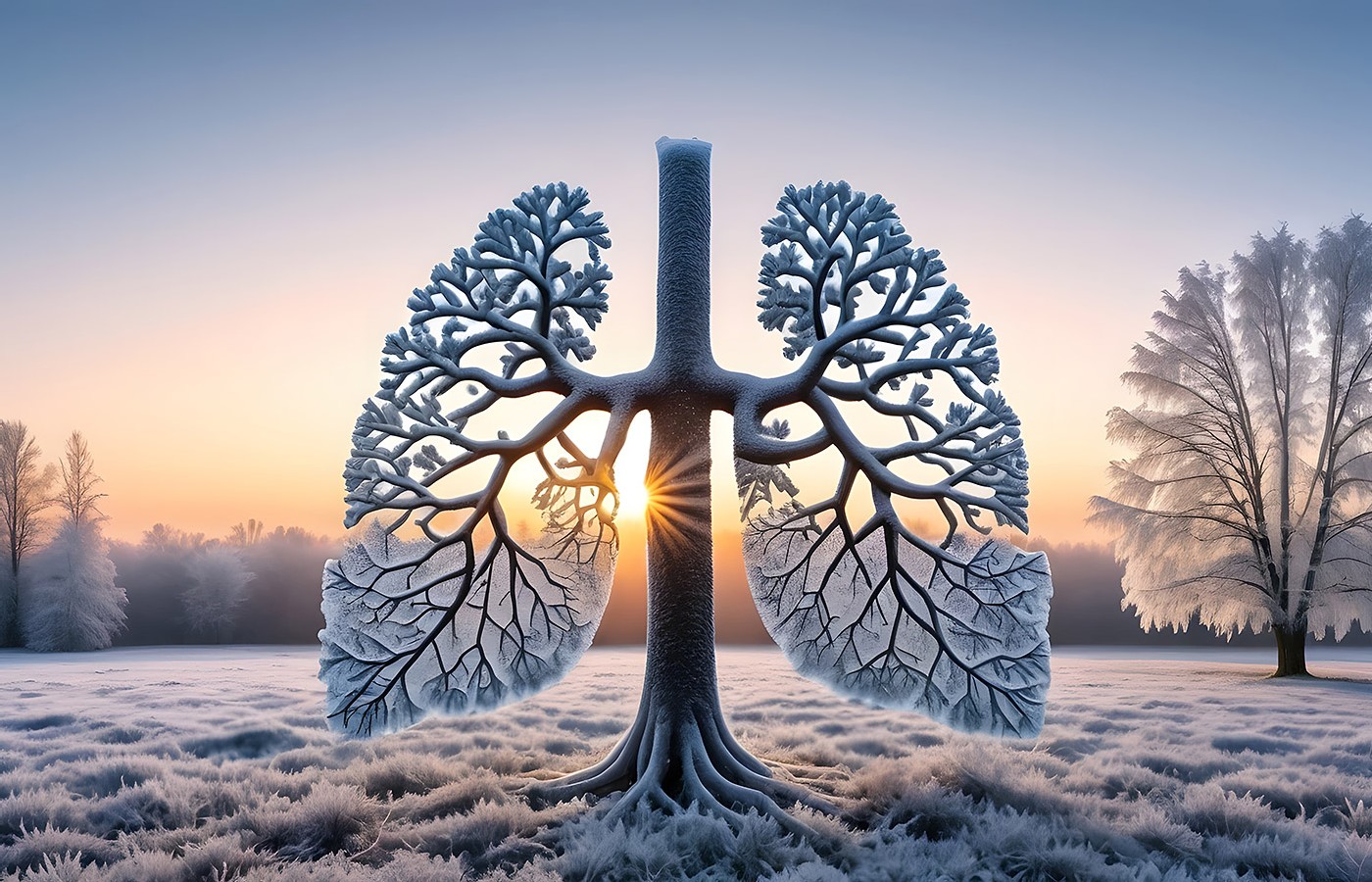
During the colder months of the year it is extremely common to encounter both acute and chronic upper respiratory challenges in the clinic. I often find practitioners worry about such issues, despite the fact that Chinese medicine is extremely effective as a first-line treatment and defense. With that said, let’s discuss the five herbal patent medicines I always have on hand to successfully treat upper respiratory challenges during the winter months.
ln Chinese medicine, the lung is considered the “delicate organ” and has a much larger field of conceptual action than contemporary allopathic medicine typically concedes. According to Chinese medicine theory, the “lung governs the qi” and “the lung governs the qi of the whole body,” as well as many other nuanced physiological / energetic actions.
With these two TCM concepts in mind, I always make it a priority to protect the lungs and prevent acute wind-cold and wind-heat issues from penetrating deeper into the body. Unfortunately, many patients do not show up in the clinic until acute issues have transformed into more complicated issues.
As a result, it is important for you to contemplate how to treat acute lung issues – and think ahead to potential challenges which may appear due to improper home treatment or side effects that can damage the delicate lung organ. The following is a list of five patent herbal medicines I use frequently with excellent results.
1. Gan Mao Ling
Gan Mao Ling is one of the most important patent medicines to administer; ideally at the first signs of the common cold / acute viral infection traditionally expressing wind-heat symptomatology. Gan Mao Ling clears heat, resolves toxins, dispels wind, relieves cough, and opens the nasal passages.
There can be many versions of this patent medicine; often specific versions also target wind-cold symptoms, plus tertiary symptoms such as headache and body aches that so frequently accompany the common cold.
I encourage all my patients to have this patent medicine on hand so they can use it at the first signs of a cold, and teach them to begin taking the patent before they come to the clinic. I often give my patients free bottles as holiday presents and teach them how to be aware of the early signs of wind-cold / wind-heat so often ignored or drowned out by allopathic over-the-counter remedies.
In my experience, if Gan Mao Ling is administered early, the majority of wind-cold / wind-heat can be easily cleared without complications. This is patent medicine with a wide range of applications for almost all types of acute cold / flu issues.
2. Sang Ju Yin
Sang Ju Yin was formulated by the creator of the famous formula Yin Qiao San, Wu Ju-Tong of the Wen Bing school of thought. Sang Ju Yin relieves the exterior, dispels wind, clears heat toxins, diffuses lung qi, and relieves cough. This is an extremely gentle, yet effective patent medicine that strongly targets the lungs.
I often use this in conjunction with Gan Mao Ling if coughing is present at the initial signs of a wind-cold / wind-heat, especially combined with specific teas or soups targeting the patient’s unique constitution. Patients often know their acute issues will quickly progress to upper respiratory infections, so I use Sang Ju Yin proactively.
Note: Sang Ju Yin does not target phlegm issues and is a very light formula. If phlegm is clearly apparent, this patent medicine is often not the ideal choice.
3. Qing Qi Hua Tan Wan
Qing Qi Hua Tan Wan is a key patent medicine when signs of phlegm-heat are predominant. This patent medicine dissolves phlegm, clears heat, descends lung qi, and relieves cough.
Qing Qi Hua Tan Wan is highly effective for wet, sticky coughs; particularly with a strong, rapid pulse and a red tongue with greasy, sticky coating, often with teethmarks. This patent medicine is drying and therefore not indicated with patients who present with a dry cough or have a long history of yin deficiency signs.
Qing Qi Hua Tan Wan can be used for the more serious infections that often have a risk of progressing into pneumonia, but this patent can also be used for a basic wet cough with heat signs. I find it to be highly effective in both scenarios.
4. Bai He Gu Jin Tang
I consider Bai He Gu Jin Tang one of the most important and underutilized patent medicines for lung issues. I use this patent medicine extensively with patients with underlying yin deficiency, as well as with senior patients.
The delicate organ of the lung often has damage to the yin – an important clinical nuance often overlooked / ignored by both Western herbal medicine and allopathic medicine. Bai He Gu Jin Tang nourishes lung yin, moistens the lungs, nourishes kidney yin, clears heat, dissolves phlegm, and stops cough.
Tongue and pulse examination are extremely important in lung yin scenarios, and this patent medicine can be used for acute and chronic issues. For patients living in dry climates, this patent can be extremely important.
Bai He Gu Jin Tang is also highly effective for use post-infection when lung tissue has been damaged by heat or excessively drying medicinals / prescriptions. I also use it in cases of dry, lingering coughs that do not resolve after standard medicinals; or when patients have taken high doses of over-the-counter guafenesin medications [Mucinex, Robitussin, etc.].
5. Chuan Bei Pi Pa Lu Syrups
A wide range of herbal syrups fall under this name. All of the various formulas tend to have the actions of dissolving phlegm, clearing heat, relieving cough, and calming weezing. Chuan Be Pi Pa Lu syrups tend to be neutral in energetics; however, some formulas may be slightly cooling in action.
These syrups are excellent for patients to have on hand in a similar manner as Gan Mao Ling and can be dosed frequently in the early stages of wind-cold / wind-heat with excellent results. I encourage patients to also dissolve this syrup in Ju Hua or chamomile tea for cough causing sleep disturbances.