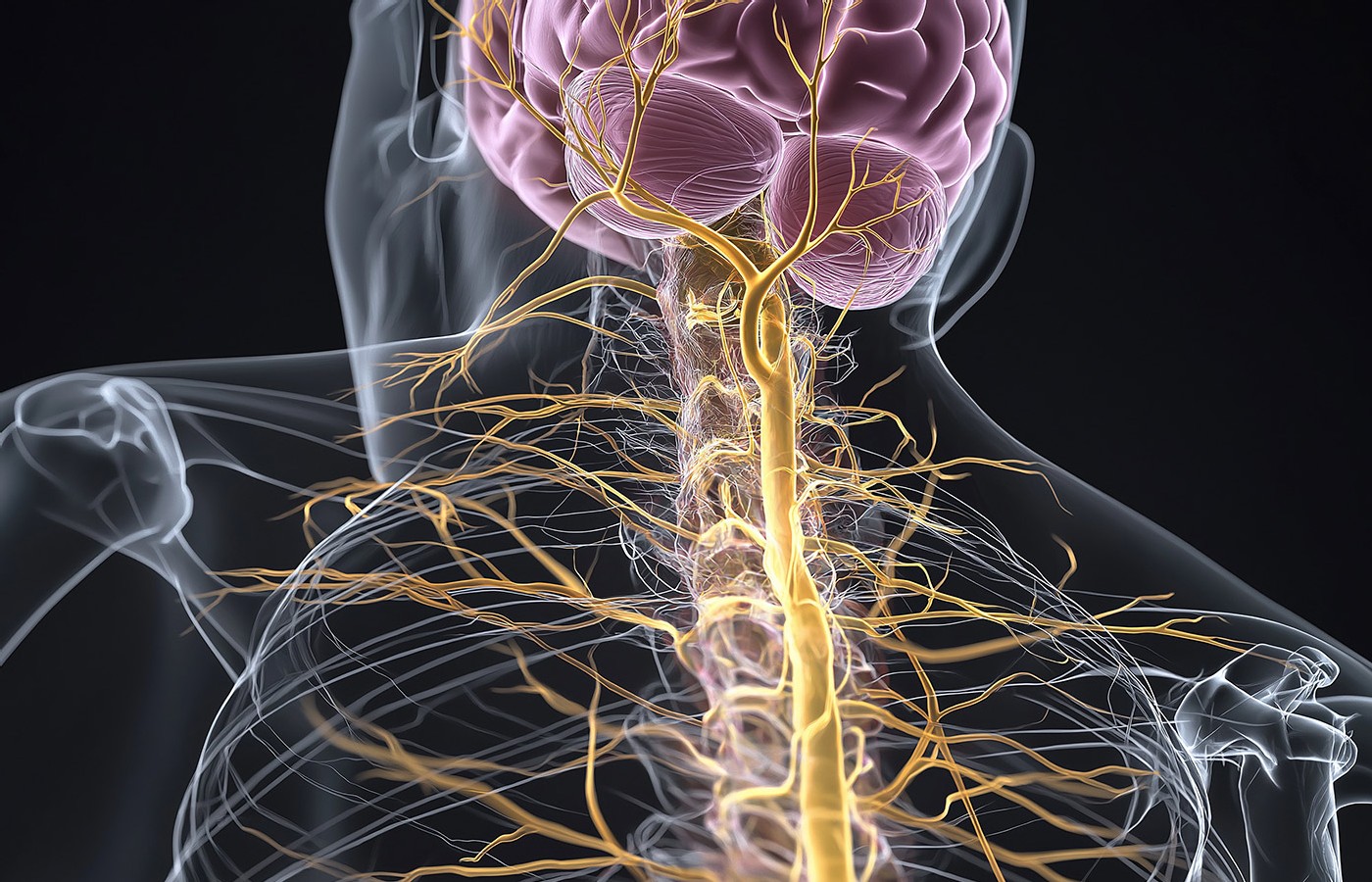
Psychological stresses have a strong influence on our physiology.1 This is known as a psychosomatic disorder.2 Such influences will result in physical damage to organs due to “inappropriate activation of the involuntary nervous system and biochemical response.”2
This can be seen when a person is in a state of rage or fear. The response will cause blood pressure and respiratory rate to rise. If not expressed appropriately the emotional state will remain unchanged.2 Psychological disorders will lead to high blood pressure, immune problems, digestive issues, and pain.1
The Root Cause: ANS Imbalance
Many psychological disorders, such as depression and anxiety, have been linked to the ANS being out of balance.3 Psychological problems such as stress and anxiety create physiological problems.1 These symptoms can show up as muscular pain, headaches, high blood pressure.1 Other symptoms that show up as ANS dysfunction are chronic abdominal pain, irritable bowel syndrome (IBS), and other gastrointestinal disorders.3
Emotional states have been said to have a major influence on the development of physical illness.2 Anxiety and mood disorders produce physical conditions.2 There has been a huge increase in emotional stress creating disease.4 Acupuncture has been found to treat stress-related physical and psychological problems.5
In Chinese medicine the nervous system is controlled by the liver-gallbladder system.4 If there is persistent emotion the nervous system will become tense and hyperactive.4 This will take us out of our psychological homeostasis and leads to a loss of feeling tranquil.6 As a result, the muscles will become tense if there is not a proper release with either movement (liver) or speech (heart).4
Li, et al. (2022),3 observed that after an increase in SNS activity, there is an increase in heart rates and lower back pain. Patients also had excessive sympathetic activity and reduced PSN activity.3 This caused higher rates of neck, shoulder and fibromyalgia pain.3
The tension in the muscles will cause more demand from the liver, which in turn will affect the circulatory system and the ANS. This response will increase blood pressure because the heart begins to push the blood too fast to the liver.4 This response creates heat, which in turn will create tension in the nervous system.4 Pain in the neck, back and shoulders, and visceral pain, are due to the ANS being out of balance.3
Dr. Leon Hammer states that psychosomatic conditions are correlated with the autonomic nervous system.4 ANS dysfunction can not only show up as physical ailments, but also emotional ones.3 Depression and anxiety being two of the main ones examined.3
In Chinese medicine, the liver and gallbladder oversee the nervous system.4 Heightened emotional states will create heat in the liver, which leads to tension in the nervous system.4 The liver is the strongest organ system in the body due to its ability to restore itself because it stores the body’s blood, making it rich in blood.4 It is the first line of defense against emotional harm.4
We can see how these emotions cause harm by examining passages from the Huang Di Nei Jing. Huang Di discusses how emotions disrupt balance in the body, stating that great anger will harm the sinews, and blood is compacted. This will cause disease if it is constant.7 Anger will cause qi to flow the wrong way.
As a result, blood accumulates in the heart and the chest.7 This will cause qi and blood to battle each other,7 and cause the yang qi to move upward. Excessive anger will attack the sinews and vessels.7 This can cause paralysis and loss of function.7
In the Ling Shu, when someone is incredibly angry the qi will rise and cause harm to the liver.8 Grief, fear, fury, and rage harm qi, which will lead to disease.8 Profuse rage harms the mind and will cause a lack of flexibility in the lower back and spine.8 People with suppressed anger will experience stuffiness and discomfort in the chest.9
This condition can be eased with acupuncture. Acupuncture has been shown to relieve sympathetic activation and therefore reduce stress.9 Patients with overactive sympathetic activity and reduced parasympathetic activity will develop pain.3 This pain is primarily seen as lower back, neck and shoulder pain. Pain relief via acupuncture is achieved by harmonizing the ANS.3
Takeaway Points
Emotions can disrupt balance in our body. This causes physiological dysfunction. The Huang Di Nei Jing gives ample support on how emotions can cause lack of balance and facilitate disease. As stated by Zhou and Benharash,10 the focus of the Huang Di Nei Jing is to educate on the use of acupuncture and meridians to bring yin/yang balance in the body. This understanding of yin/yang balance is what helps restore balance, and can help treat a variety of diseases and conditions.10
In Western medicine we can see the comparison of yin/yang balance to the parasympathetic and sympathetic nervous systems.11 Acupuncture and Chinese Medicine have been used for thousands of years.12 It is through these correlations of yin/yang balance and ANS mechanisms that acupuncture can successfully treat pain and disease.
References
- Feldman SR. Understanding Psychology, 11th Edition. McGraw-Hill (India), 2013.
- Satsangi, AK, Brugnoli MP. Anxiety and psychosomatic symptoms in palliative care: from neuro-psychobiological response to stress, to symptoms’ management with clinical hypnosis and meditative states. Ann Palliative Med, 2018 Jan;7(1):75-111.
- Li YW, Li W, Wang ST, et al. The autonomic nervous system: a potential link to the efficacy of acupuncture. Front Neurosci, 2022 Dec 8;16:1038945.
- Hammer LI. Dragon Rises, Red Bird Flies: Psychology and Chinese Medicine, Revised Edition. Eastland Press, 2005
- Chen A. An introduction to sequential electric acupuncture (SEA) in the treatment of stress related physical and mental disorders. Acu and Elecro-Therapeutics Res: Int J Integrative Med, 1992;17(4):273-83.
- Plummer JP. Acupuncture and homeostasis: physiological, physical (postural) and psychological. Am J Chinese Med, 1981 Spring;9(1):1-14.
- Unschuld UP, Tessenow H, Jinsheng, Z. Huang Di Nei Jing Su Wen, Volume 1. Berkeley and Los Angeles, CA: University of California Press, 2011.
- Unschuld UP. Huang Di Nei Jing Ling Shu: The Ancient Classic on Needle Therapy. Oakland, CA: University of California Press, 2016.
- Choi Y, Park IH, Kim JE, et al. Acupuncture for psychosomatic symptoms of hwa-byung, an anger syndrome: a feasibility randomized controlled trial. Frontier Psychol, 2021 Sep 24;12:651649.
- Zhou W, Benharash P. Effects and mechanisms of acupuncture based on the principle of meridians. J Acu Meridian Studies, 2014 Aug;7(4):190-3.
- Li QQ, Shi GX, Xu Q, et al. Acupuncture effect and central autonomic regulation. Evid-Based Compl Alt Med, 2013;2013:267959.
- Huang W, Kutner N, Bliwise DL. Autonomic activation in insomnia: the case for acupuncture. J Clin Sleep Med, 2011 Feb 15;7(1):95-102.