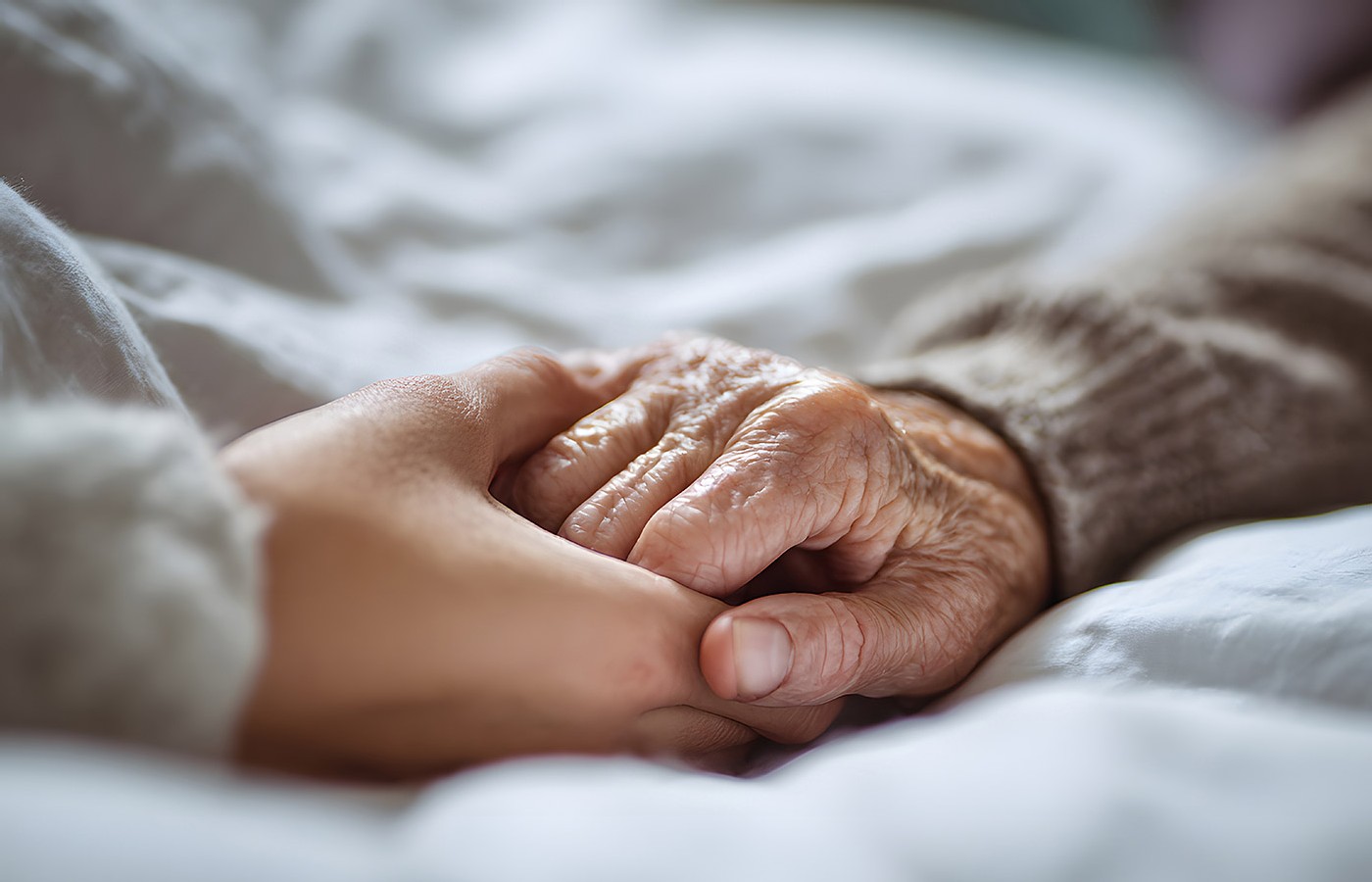
Palliative care is a multidisciplinary approach that focuses on improving the quality of life for patients, family members and care providers. In this interdisciplinary field, doctors and other care providers work with patients and families to support the patient’s goals and wishes.1
Traditional Chinese medicine (TCM) aligns with the holistic philosophy of palliative care and can be integrated with conventional modalities for comprehensive treatment. As TCM encompasses diverse therapeutic practices based on theories of qi, yin-yang balance, and the five elements, these modalities can offer support that benefits patients with complex illnesses and strengthen their care plans.
Principles & Foundations of TCM in Palliative Care
The principles of TCM are rooted in the concept that health results from the harmonious flow of qi through the body.2 Disease, from this perspective, represents disharmony or blockage in the flow of energy. In the context of palliative care, pain, fatigue, and emotional distress are thus manifestations of imbalance among the body’s physiological and psychological systems.
For example, cancer-related fatigue might be interpreted a qi deficiency and chronic pain could be associated with qi stagnation or blood stasis.3-4 Emotional disturbances such as anxiety and depression may reflect disharmony between the heart and liver systems.5
Because TCM treatments seek to correct these imbalances through individualized interventions, rather than focusing solely on isolated symptoms, this integrative model complements the holistic framework of palliative care, and fosters a patient-centered approach that respects cultural diversity and personal autonomy.
Clinical Applications
Pain Management: Physical pain is one of the most distressing symptoms in palliative care. While conventional treatments do provide pain relief, there remains a need for additional options, especially for those in the final stages of illness.6
Acupuncture and acupressure have been extensively studied for their pain-relieving effects. Mechanistically, acupuncture is believed to modulate pain by stimulating the release of endorphins.7 It may also regulate neurotransmitters and affect the autonomic nervous system.8
Research has demonstrated that acupuncture can be beneficial in managing various types of chronic and acute pain, either as an adjunct to opioids or as an alternative when side effects limit pharmacologic options.9
Management of Gastrointestinal Symptoms: Nausea, vomiting and loss of appetite are common symptoms in patients undergoing treatments like chemotherapy. They can also result from advanced disease progression. TCM herbs and formulas, such as ginger and Liu Jun Zi Tang, have been shown in studies to have antiemetic properties and to relieve nausea and vomiting.10
Fatigue and Weakness: Cancer-related fatigue and general weakness can significantly reduce quality of life. With TCM viewing these symptoms as deficiencies in qi and blood, herbal treatments, such as huang qi (Astragalus membranaceus), ren shen (Ginseng radix), and gentle exercises like tai chi, may boost vitality and stamina.11
Although research on huang qi is limited, studies indicate it may have a positive impact on cancer-related fatigue and enhance overall quality of life for patients.12 Ren shen shows similar benefits. However, researchers emphasize the need for more thorough randomized trials to verify these effects.
Psychological Support: The emotional and existential aspects of suffering are essential in palliative care. The significance of mental and spiritual health cannot be overlooked during treatment for a terminal illness. As we know, TCM considers the mind inseparable from bodily function, and acupuncture is linked to reduced stress and improvements in mood and sleep quality.13 TCM herbal formulas, such as formulas that contain suan zao ren (Semen Ziziphi Spinosae), have shown promise in treating insomnia.14
TCM’s Place in Palliative Care
The positive effects of acupuncture and specific herbal therapies in randomized, controlled trials and systematic reviews suggest TCM provides a valuable complementary method for improving symptom management and overall well-being in palliative care. This personalized, person-centered approach closely aligns with the main principles of palliative medicine, addressing the physical, emotional and spiritual aspects of suffering. Although more research is needed to standardize methods and verify effectiveness, TCM can play a significant part in integrative palliative care.
References
- “What Are Palliative Care and Hospice Care?” National Institute on Aging, last updated May 14, 2021.
- O’Connor J, Bensky D (editors). Acupuncture : A Comprehensive Text. Eastland Press, 1981.
- Hsu CH, Lee CJ, Chien TJ, et al. The relationship between qi deficiency, cancer-related fatigue and quality of life in cancer patients. J Tradit Complement Med, Apr 2012;2(2):129-35.
- Lin Y. Exploring the pathogenesis of cancer pain from the perspective of traditional Chinese medicine. Theoretical Nat Sci, 2023;8(1):109-118.
- Ye J, Cai S, Cheung WM, Tsang HWH. An East Meets West approach to the understanding of emotion dysregulation in depression: from perspective to scientific evidence. Front Psychol, 2019;10:574.
- Hedman C, Furst P, Strang P, et al. Pain prevalence and pain relief in end-of-life care - a national registry study. BMC Palliat Care, Jul 15 2024;23(1):171.
- Han JS. Acupuncture and endorphins. Neurosci Lett, May 6 2004;361(1-3):258-61.
- White A, Cummings TM, Filshie J. An Introduction to Western Medical Acupuncture, 2nd Edition. Elsevier Saunders, 2018.
- Nielsen A, Dusek JA, Taylor-Swanson L, Tick H. Acupuncture therapy as an evidence-based nonpharmacologic strategy for comprehensive acute pain care: The Academic Consortium Pain Task Force white paper update. Pain Med, Aug 31 2022;23(9):1582-1612.
- Zhao YZ, Dai YZ, Nie K. Research progress on the antiemetic effect of traditional Chinese medicine against chemotherapy-induced nausea and vomiting: a review. Front Pharmacol, 2021;12:790784.
- Du X, Zhan J, Li D, et al. Recent advances in Chinese and Western medicine for cancer-related fatigue: a review. Future Integr Med, 2023;2(4):206-215.
- Sheng X, Yang L, Huang B, et al. Efficacy of Astragalus Membranaceus (huang qi) for cancer-related fatigue: a systematic review and meta-analysis of randomized controlled studies. Integr Cancer Ther, Jan-Dec 2025;24:15347354241313344.
- Zhao FY, Spencer SJ, Kennedy GA, et al. Acupuncture for primary insomnia: effectiveness, safety, mechanisms and recommendations for clinical practice. Sleep Med Rev, Apr 2024;74:101892.
- Zhou QH, Zhou XL, Xu MB, et al. Suanzaoren formulae for insomnia: updated clinical evidence and possible mechanisms. Front Pharmacol, 2018;9:76.