Alyssa Risi, DTCM, Dipl. Ac., LAc
I have been treating patients with TCM and acupuncture physical medicine (APM) in physical therapy clinic settings since 2018. Over the course of this career, I’ve become familiar with treating ortho, sports medicine and pain management cases. The current office I am staffed in has gained the reputation of being the “ACL rehab specialists of the area.” Therefore, I’ve seen a good amount of patients recovering from ACL surgery, ranging from pre-hab to full clearance and returning to sport.
In this time, I’ve worked with many patients throughout their recovery using traditional acupuncture and trigger-point therapy. Usually, I work with them before turning them over to their respective physical therapist. The collective logic behind this is to help soft tissue loosen, reset some of the pain receptor cycles, improve mobility, and relax the central nervous system.
As the patients feel better after acupuncture, they report going into PT with a better mindset and physically feeling like they can gain more out of their session. In this order, everyone experiences good outcomes.
As stated above, our office specializes in ACL reconstruction, among other injuries. We see athletes from all sports who have sustained ligamentous injury during practice, games or camps / showcases. Their treatment begins with that first call to the office, and from there we mobilize as a staff to ensure they receive the best care possible.
The first order of business is to get them in and evaluate. The second is to curate a treatment plan that fits their needs and goals. By doing so, we ensure a recovery that goes as smoothly as possible, and prepare for any potential hiccups along the way when necessary.
In the beginning phases of ACL rehab the scars are healing, there is swelling and bruising around the surgical sites, the patient is on medication, unable to get comfortable or sleep, and their body is in absolute overdrive trying to re-regulate. In my experience, less is more until there’s a green light to get more aggressive.
Usually around the two-week mark, patients are feeling a bit more like themselves, the scars are usually closed up and PT is well underway. Early intervention is ideal, so within the first couple of weeks I step in and aid in the recovery.
The main goals while beginning ACL post-op care are to keep the surgical scars clean and closed, get some swelling out and gain range of motion back. Many times the patient is stiff, yet also anxious to bend or straighten their knee, so we try to coax the brain-body connection to accept care, and start the process of providing acupuncture to help from a soft-tissue and nervous system perspective.
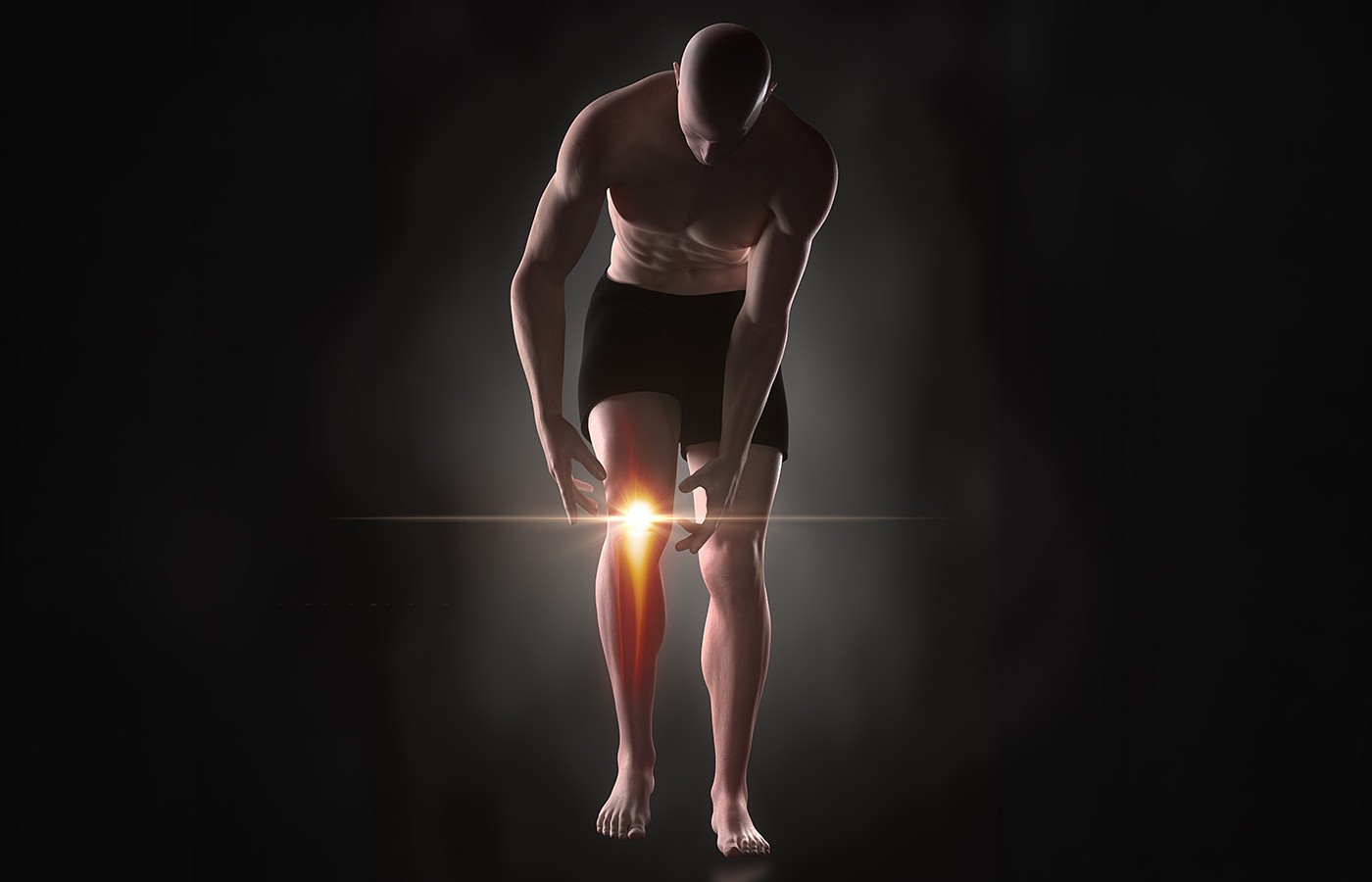
The fight to bend their knee tends to come from the posterior aspect, and I’ve learned that there is a crucial muscle behind the scenes that’s being trained to stay tight and contracted, preventing patients from gaining extension in a timely manner: the popliteus.
The popliteus is a muscle located behind the knee, connecting the femur to the tibia. It traverses the knee pit and aids in tibial rotation, overall knee stabilization and, as luck would have it, unlocking knee extension to a bent position. My logic is that these muscles really activate against force; an example being a PT sliding and pushing a knee into flexion while the patient fights back.
And with constant activation, the popliteus spasms or remains in a contracted state. Therefore, gaining flexion and extension is impaired.
The goal behind ACL acupuncture treatments is to implement the body’s autoregulatory skills and enhance them, while also relieving this muscle’s tightness and posterior soft-tissue tension in order for patients to meet their rehab s/p protocol goals. I’ve noticed more times than not that patients complain of “seemingly random” posterior knee pain and come to find the popliteus is always tight and tender upon palpation.
Although surgery was performed at the anterior aspect of the knee, the posterior patellar region must always be taken into account as well. And this is where acupuncture’s versatility comes into play: If the PTs focus on the anterior aspect of the knee, needling can be applied to the posterior to allow patients a well-rounded session of soft-tissue work from two lenses.
In our office, the majority of ACL patients will experience some kind of posterior knee pain. Every patient’s timeline is different, but the revelation is common at some point over the course of rehab. I first saw this about three years ago in a case when a patient, who’d been a PT herself, was several months out of ACL surgery, yet still experiencing pain and tightness – and didn’t understand why.
After some investigative palpating, we came to the conclusion that the popliteus was tight and tender. After a few sessions of traditional acupuncture mixed with local trigger points, stim, gua sha and cupping, she gained full ROM and was able to work back into running, lifting and the like. Points used usually include: SP 6, KD 9-10, UB 58, UB 37-40, and GB 37, with trigger points / stim at the popliteus, lower hamstring and upper gastroc muscles, followed by gua sha and cupping.
From her, I’ve learned to check every popliteus I come across in ACL patients who seemingly plateau at certain phases of rehab. Most times after a few sessions of acupuncture, the patient is able to gain more steady mobility and stay on track toward meeting their range-of-motion goals.