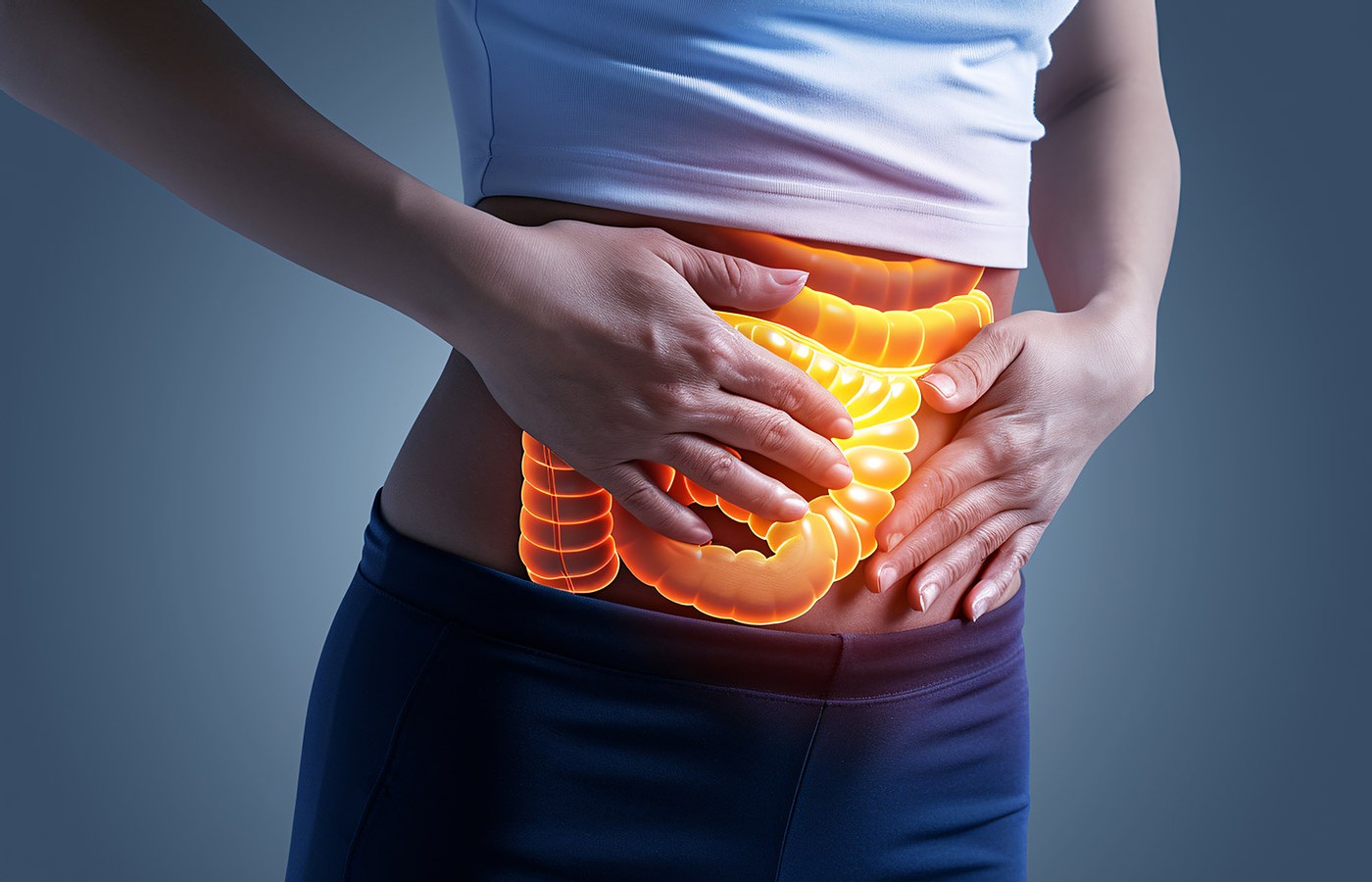
Ulcerative colitis (UC) presents significant therapeutic challenges, with conventional treatments often producing incomplete responses and adverse effects. Traditional Chinese medicine (TCM) offers complementary approaches through time-tested herbal formulas that address both acute inflammation and underlying constitutional imbalances.1-3
This article documents five TCM formulas approved by China’s National Medical Products Administration (NMPA, formerly State Drug Administration/CFDA) for UC treatment. These formulas, some dating back over 2,000 years, have demonstrated clinical efficacy in modern randomized, controlled trials when used as adjuvant therapy with conventional Western medicine.4-6
For example, a 2024 network meta-analysis of 64 trials involving 5,456 patients confirmed that combining TCM formulas with mesalazine achieves superior outcomes compared to mesalazine alone, including improved clinical efficacy, reduced inflammatory markers, lower recurrence rates, and better quality-of-life scores.1,7-8
1. Baitouweng Decoction (白头翁汤, BTWT)
Function: Clears heat, cools blood, resolves toxicity, and stops dysentery. Treats damp-heat dysentery with bloody stool, abdominal pain and tenesmus.9
Key Ingredients:
- Bai tou weng (Pulsatilla chinensis): Bitter, cold; enters large intestine, liver, stomach; clears heat, cools blood, stops dysentery.
- Huang lian (Coptis chinensis): Bitter, cold; drains damp-heat, resolves intestinal toxicity.
- Huang bai (Phellodendron chinense): Bitter, cold; clears heat in lower burner.
- Qin pi (Fraxinus rhynchophylla): Bitter, astringent, cold; astringes intestines, stops dysentery.
Clinical Application: Used for active UC with damp-heat pattern; particularly effective for bloody diarrhea. Mechanisms include regulating intestinal microbiota, suppressing IL-6/STAT3 and mTORC1 pathways, and restoring Th17/Treg balance.3-4,9
2. Chang-Yan-Ning (肠炎宁, CYN)
Function: Clears heat, eliminates dampness, promotes qi circulation, and relieves pain. Used for acute and chronic gastroenteritis with damp-heat.6
Key Ingredients:
- Di jin cao (Euphorbia humifusa): Acrid, slightly bitter, cool; clears heat, stops dysentery.
- Jin yin hua (Lonicera japonica): Sweet, cold; resolves toxicity, treats intestinal inflammation.
- Huang qin (Scutellaria baicalensis): Bitter, cold; drains damp-heat.
- Mu xiang (Aucklandia lappa): Acrid, bitter, warm; promotes qi circulation, prevents stagnation.
Clinical Application: Balances cold heat-clearing herbs with warm qi-regulating herbs. Effective for damp-heat colitis with qi stagnation manifesting as abdominal pain and bloating.6,10
3. Xi Lei Powder (锡类散, XLS)
Function: Clears heat, resolves toxicity, disperses swelling, and promotes tissue regeneration. Applied topically for ulcer healing.1,11-12
Key Ingredients:
- Qing dai (natural indigo): Salty, cold; clears heat, cools blood.
- Bing pian (Borneol): Acrid, bitter, slightly cold; promotes tissue regeneration.
- Niu huang (Calculus bovis): Bitter, cool; resolves toxicity.
- Xuan ming fen (sodium sulfate): Salty, bitter, cold; purges heat, disperses swelling.
Clinical Application: Primarily used as retention enema or suppository for ulcerative proctitis. Degrades proinflammatory mediators while promoting mucosal repair and epithelial proliferation.6,11-12
4. Shenling Baizhu Powder (参苓白术散, SLBZS)
Function: Strengthens spleen, replenishes qi, eliminates dampness, and stops diarrhea. Used for spleen deficiency with dampness.2
Key Ingredients:
- Ren shen (Panax ginseng): Sweet, neutral-warm; tonifies yuan qi, strengthens spleen.
- Bai zhu (Atractylodes macrocephala): Bitter, sweet, warm; strengthens spleen, dries dampness.
- Fu ling (Poria cocos): Sweet, bland, neutral; eliminates dampness, strengthens spleen.
- Yi yi ren (Coix lacryma-jobi): Sweet, bland, cool; drains dampness, clears heat.
- Gan cao (Glycyrrhiza uralensis): Sweet, neutral; harmonizes formula.
Clinical Application: Distinguished from other formulas by tonifying rather than purely clearing. Used in remission phase or chronic UC with spleen deficiency. Regulates gut microbiota, modulates immune function, and repairs intestinal barrier through TLR5/MyD88/NF-кB pathway.2,10
5. Shaoyao Decoction (芍药汤, SYT)
Function: Regulates qi and blood, clears heat, eliminates dampness, and stops dysentery. Treats damp-heat dysentery with bloody, purulent stool.4,14
Key Ingredients:
- Bai shao (Paeonia lactiflora): Bitter, sour, slightly cold; nourishes blood, relieves abdominal pain.
- Dang gui (Angelica sinensis): Sweet, acrid, bitter, warm; tonifies and activates blood.
- Huang lian & huang qin: Bitter, cold; clears damp-heat.
- Da huang (Rheum palmatum): Bitter, cold; purges heat accumulation.
- Mu xiang (Aucklandia lappa): Acrid, bitter, warm; promotes qi circulation.
- Rou gui (Cinnamomum cassia): Acrid, sweet, hot; warms yang, disperses cold.
Clinical Application: Exemplifies TCM principle of balancing cold and warm herbs. Addresses both excess (damp-heat) and deficiency (qi and blood) simultaneously. Inhibits IL-17a-mediated M1 macrophage polarization and restores Th17/Treg balance.4,10,14
Clinical Application Guidelines
Pattern Differentiation: Active inflammation with damp-heat: BTWT, SYT, CYN;1,7,10 heat-toxicity with ulceration: XLS;11-12 spleen deficiency with dampness (remission/chronic): SLBZS.2
Treatment Principles: These formulas are prescribed based on TCM syndrome differentiation.10,13 Heat-clearing formulas (BTWT, CYN, XLS, SYT) target active inflammation, while SLBZS addresses underlying deficiency to prevent recurrence.1-2 The strategic combination of cold and warm herbs prevents injury to yang qi while effectively clearing pathological heat.8
Summary / Key Points
These five NMPA-approved TCM formulas represent evidence-based integrative approaches to ulcerative colitis management.1,7-8,10 Each formula addresses specific TCM patterns: BTWT and SYT excel in treating acute damp-heat dysentery with bloody stool; CYN addresses damp-heat with qi stagnation; XLS promotes ulcer healing through topical application; and SLBZS tonifies spleen qi for chronic conditions and remission maintenance.
Modern pharmacological research has elucidated multiple mechanisms including modulation of inflammatory pathways (IL-6/STAT3, NF-кB, NLRP3), regulation of immune balance (Th17/Treg), restoration of intestinal barrier function, and optimization of gut microbiota composition.2-4,9,11 Clinical evidence from 64 randomized, controlled trials demonstrates that integrating these TCM formulas with conventional Western medicine produces superior therapeutic outcomes compared to Western medicine alone, offering patients improved symptom control, reduced recurrence rates, and enhanced quality of life with minimal adverse effects.1,7-8,12-13
References
- Zhang X, Liu W, Wang Y, et al. Five commonly used traditional Chinese medicine formulas in the treatment of ulcerative colitis: a network meta-analysis. World J Clin Cases, 2024;12(22):5067-5078.
- Chen X, Tang R, Luo Y, et al. Traditional Chinese medicine prescription Shenling BaiZhu powder to treat ulcerative colitis: Clinical evidence and potential mechanisms. Front Pharmacol, 2022;13:978558.
- Wang X, Huang S, Zhang M, et al. Baitouweng decoction ameliorates ulcerative colitis in mice partially attributed to regulating Th17/Treg balance and restoring intestinal epithelial barrier. Front Pharmacol, 2020;11:531117.
- Wu J, Luo Y, Shen Y, et al. Integrated metabonomics and network pharmacology to reveal the action mechanism effect of Shaoyao decoction on ulcerative colitis. Drug Des Devel Ther, 2022;16:3739-3776.
- Yu W, Zhang Y, Kang C, et al. The pharmacological evidence of the chang-yan-ning formula in the treatment of colitis. Front Pharmacol, 2022;13:1029088.
- Hao XA, Zheng W, Luo P, et al. Xilei San ameliorates experimental colitis in rats by selectively degrading proinflammatory mediators and promoting mucosal repair. Evid-Based Complement Alternat Med, 2014;2014:569587.
- Zeng Y, Zhang JW, Yang J. Optimal traditional Chinese medicine formulas in treating ulcerative colitis: choose one or take it all? World J Clin Cases, 2024;12(32):6570-6574.
- Hao WR, Cheng CY, Cheng TH. Enhancing ulcerative colitis treatment with traditional Chinese medicine. World J Clin Cases, 2024;12(30):6358-6360.
- Zhang S, Zhao L, Shen H, et al. International clinical practice guideline on the use of traditional Chinese medicine for ulcerative colitis by Board of Specialty Committee of Digestive System Disease of World Federation of Chinese Medicine Societies (2023). Phytother Res, 2024;38(2):970-999.
- Chen M, Ding Y, Tong Z. Efficacy and safety of Sophora flavescens (Kushen) based Traditional Chinese Medicine in the treatment of ulcerative colitis: clinical evidence and potential mechanisms. Front Pharmacol, 2020;11:603476.
- Sun YX, Yang GY, Karamacoska D, et al. Chinese patent medicine as adjuvant for mild-to-moderate active ulcerative colitis: a network meta-analysis of randomized controlled trials. Evid-Based Complement Alternat Med, 2021;2021:1075886.
- Lu A, Sun Y, Gao H, Chen P. Efficacy and safety of Traditional Chinese Medicine interventions in unresponsive mild-to-moderate ulcerative colitis: a meta-analysis of randomized controlled trials. Pharmacognosy Magazine, 2025;21(3):1090-1099
- Zhao MX, Zhang MY, Xu PQ, et al. Traditional Chinese medicine for ulcerative colitis: systematic reviews based on PRIO-harms. Zhongguo Zhong Yao Za Zhi, 2020;45(5):975-981.
- Pan C, Liu M, Li H, et al. Systematic evaluation of randomized clinical trials of Huangqin Tang in combination with mesalazine for ulcerative colitis. Evid-Based Complement Alternat Med, 2022;2022:2175913.