There is a peculiar tragedy in watching a profession surrender its identity through the very acts meant to modernize it. Over the past five years, the institutions that govern East Asian medicine in the United States have replaced a paradigm with a parts list, leaving a highly trained workforce without a name the public can recognize, a boundary it can defend or a soul to call its own.
In the early 1980s our founding bodies organized under oriental medicine, a term meant to unite Chinese, Korean, Japanese, and Vietnamese traditions within one coherent system. Whatever its faults, the word named a medicine: a way of seeing the body and disease. By the late 2010s, use of the word oriental had rightly become untenable, being anachronistic, reductive and politically fraught.
When the Wound Was Made
The Accreditation Commission for Acupuncture and Oriental Medicine surveyed 1,700 stakeholders and in June 2021 voted unanimously to rename itself. Here the wound was made. The commission had a paradigm-based alternative in its own mission statement, which described it as the accreditor for acupuncture and East Asian medicine. Yet for its title it bypassed that phrase and chose “Acupuncture and Herbal Medicine.” The NCCAOM followed in October 2025, becoming the National Certification Board for Acupuncture and Herbal Medicine.
Trading a System for Modalities
We traded a cohesive system of medicine for two isolated physical modalities. Consider what each half does to us.
Acupuncture is a procedure, and a procedure can be claimed by professions that operate within no East Asian paradigm at all. Chiropractors needle on short-course certificates. Medical doctors practice “medical acupuncture” on biomedical premises. Physical therapists have absorbed “dry needling” into their scopes, calling it manual therapy rather than acupuncture, even as we insist the technique is fundamentally ours.
When the accreditor and the certifying board both hang their identities on the word acupuncture, they cannot separate the needle from the comprehensive profession around it. Others can truthfully say they “perform acupuncture,” and our exclusive claim dissolves in their hands.
Herbal medicine fails more completely. It names no paradigm and carries no cultural anchor. Naturopaths, functional medicine practitioners, Western herbalists, and retail supplement advisors all use herbs. The phrase communicates nothing of East Asian formula strategy, nothing of Jing Fang, nothing of the combining logic that distinguishes a classical formula from a handful of botanicals. We have accepted a title we share with the vitamin aisle.
Making Matters Worse...
The fracturing reaches the degrees themselves. Peer professions consolidated around a single recognizable clinical doctorate: the MD, the DC, the DPT, the PharmD. We did the opposite. More than 20 institutional degree-title variations now span accredited programs where once a unified oriental medicine degree served as the baseline for licensure in California, Florida and Texas.
Even among ourselves there is no single educational head; no credential an insurer, a hospital or a patient could hold in mind. This is the literal structure of a body with no head.
A Crisis of Our Own Doing
I want to be precise about how grave this is. The professions reorganized by the Flexner Report in 1910 were forced into a paradigm not their own, yet they were forced into a paradigm, given a head and a defensible boundary. Our situation is worse. No external authority is imposing coherence on us.
We are disintegrating from within, dissolving our identity through our own committees – and unlike the homeopaths and eclectics of Flexner’s era, we cannot blame an outside hand. We are doing this to ourselves.
So what, within the current framework, still identifies this profession? Not a name, for the name now points at techniques anyone may borrow. What remains is the curriculum: thousands of hours of channel theory, traditional diagnostics, formula construction, and safety training that no weekend certificate replicates.
How to Regain Our Identity
Our identity has retreated into the educational infrastructure, visible to accreditors and invisible to the public and to federal regulators. That invisibility carries a price. When the Department of Education’s RISE committee drafted its list of “professional degree” programs in early 2026, it omitted acupuncture and herbal medicine entirely, threatening to cap our students’ loans where peer professions face no ceiling. A profession the public cannot name is a profession the government can overlook.
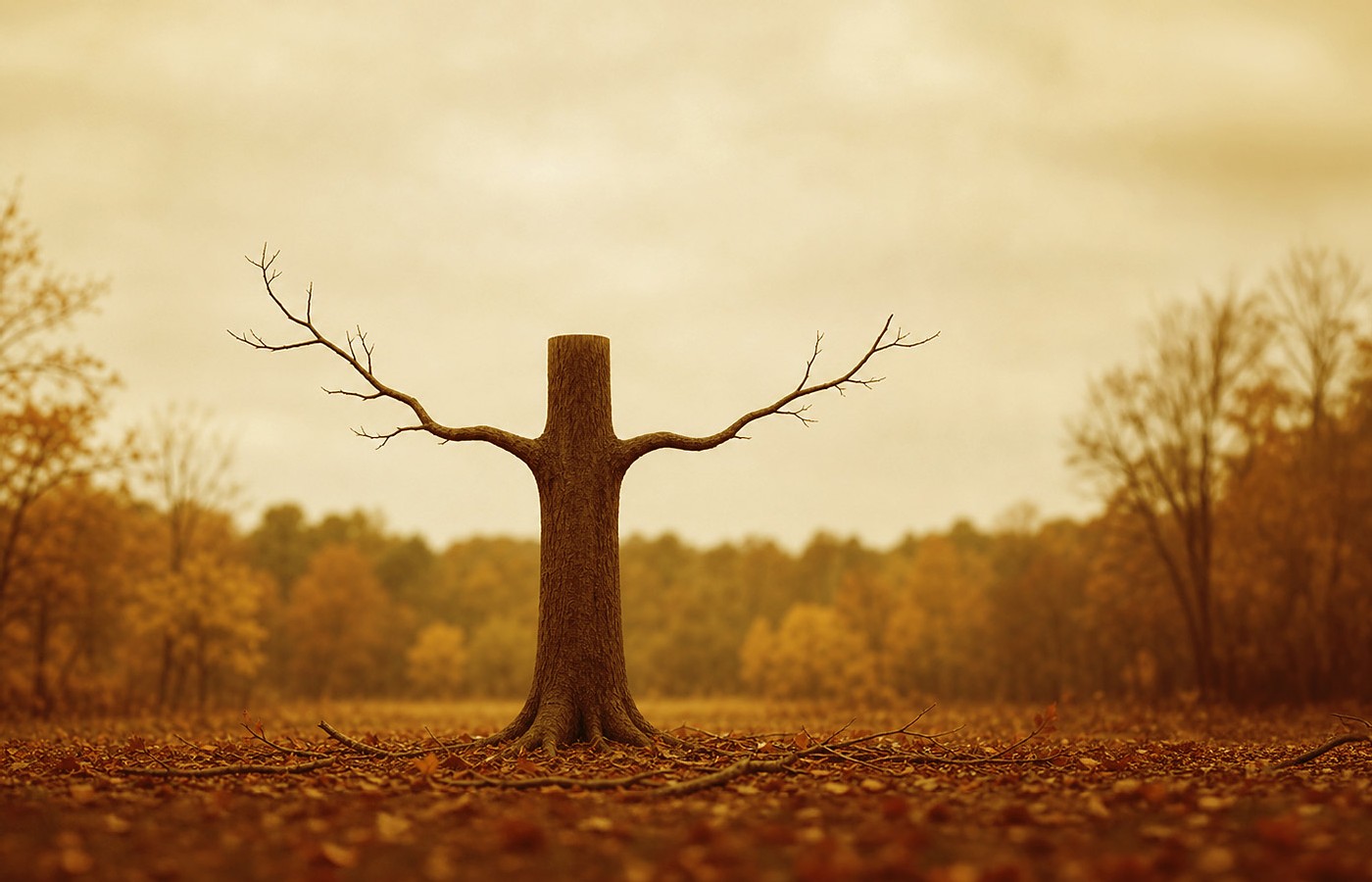
This is why naming alone will not save us. What we need is soul recovery, in the deepest sense the phrase will bear: the work of gathering a scattered, headless self and asking again the questions a profession must answer to exist at all. Who are we? Why are we here? What do we hold that no one else holds?
We have answered by reflex, by listing our tools, and the answer has hollowed us out. A discipline that defines itself by its instruments invites their loss; the moment we agreed to be known by the needle and the herb rather than by the medicine, we conceded that anyone who picks up a needle stands on our ground.
The recovery begins with a decision to be known by our medicine rather than our modalities; in our public language, our degree titles and our advocacy. This is where ACAHM must lead. The commission unmade our coherence, and it is the body best positioned to restore it. I call on ACAHM to convene the field around a single question it has never squarely asked, which is not “Which techniques do we accredit?” but “What medicine do we serve?” and to act on the answer: to reclaim a paradigm-based name in “East Asian medicine,” to consolidate the fractured degree titles into a recognizable clinical doctorate, and to defend that identity in the federal arenas where our invisibility now costs our students dearly.
Accreditation has always been more than gatekeeping. At this moment it is the only instrument with the standing to gather a scattered profession and give it back its head.
It is not too late. But it requires that we stop fracturing and start gathering; that we remember the body we have dismembered and name ourselves, at last, as the integral medicine we have always been. We named ourselves into invisibility. We can name our way back, but only if we first remember who we are.